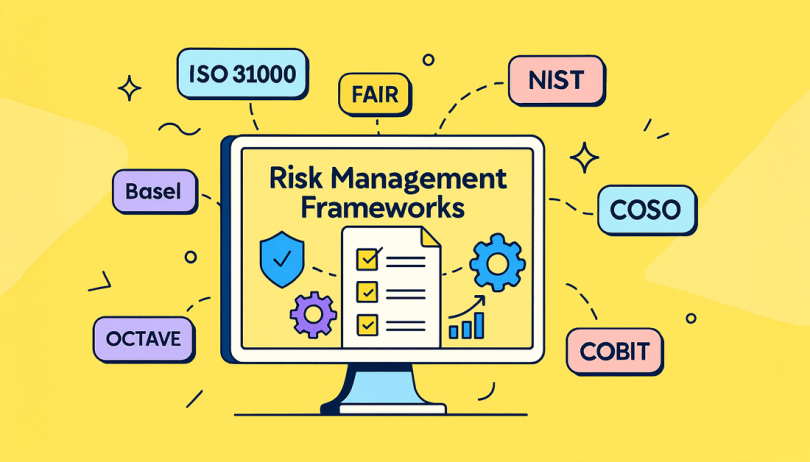
Mixed bet risk management is the discipline of controlling risk when you place multiple selections across different markets, matches, or even slip types. Instead of treating each bet in isolation, you look at your portfolio of bets as one interconnected system. This approach is crucial for bettors who combine singles, parlays, and mixed markets such as handicaps, totals, and specials. When multiple legs and bet types are involved, risk does not just add up it interacts, correlates, and sometimes multiplies.
Effective mixed bet risk management helps you avoid common problems such as overexposing your bankroll to one team, stacking too many high-variance legs, or creating accidental correlations that increase downside without improving expected return. It transforms betting from impulsive ticket building into a structured process where every selection has a defined purpose, risk level, and analytical justification.
Before you can apply practical strategies or advanced techniques, you first need a clear understanding of what mixed bet risk management really involves and why it is fundamentally different from managing simple single bets.
Understanding the Concept of Mixed Bet Risk Management
Mixed bet risk management refers to the way you identify, evaluate, and control risk when you place multiple selections that interact with one another. A “mixed bet” can mean:
- A parlay with different market types (1X2, over/under, Asian handicap)
- A combination of parlays and singles on the same matchday
- Multiple tickets that share some of the same teams or markets
- Live bets layered on top of pre-match positions
In all of these cases, your total exposure is more complex than a single bet. You have to think about:
- How many bets depend on the same event
- How market types interact (for example, match result + goals)
- How your overall bankroll is affected if one match goes against you
Mixed bet risk management therefore goes beyond “Is this bet good?” and asks: “How does this bet fit into my overall risk structure today, this week, and over the long term?”
The goal is not to remove risk — without risk, there is no return — but to shape it into a controlled, strategically chosen profile. Once this concept is clear, the next step is to understand the key components that influence risk levels in mixed bet structures.
Key Components That Influence Mixed Bet Risk Levels
Several core components determine how risky your mixed bets are:
- Leg Count
More legs in a parlay or more tickets placed at once increase overall exposure and variance. - Market Type
Some markets are more volatile (exact score, first goalscorer) while others are more stable (double chance, under 4.5 goals). - Odds Variance
High odds legs tend to be less likely to win. Mixing too many of them shifts your risk profile into high-variance territory. - Correlation Between Legs
When multiple bets depend on similar events (e.g., the same team winning, scoring, or dominating), your risk becomes concentrated. - Stake Size and Distribution
How you allocate stakes across singles and parlays affects how large your drawdowns can be.
Understanding these components gives you a foundation. The next step is identifying where, in practical terms, things often go wrong.
Identifying Core Risks in Mixed Bet Construction
Once you grasp the basic components, you can start identifying the core risks that appear when constructing mixed bets. These risks can be technical (linked to odds and markets), contextual (linked to football realities), or behavioural (linked to your own psychology).
Common risk categories include:
- Match-specific risk — unpredictability of individual fixtures, injuries, red cards, tactical surprises.
- Structural risk — the way legs are combined, especially in parlays.
- Correlation risk — exposure to the same outcome through multiple bets.
- Timing risk — placing bets before critical information (lineups, injury updates) is available.
- Bankroll risk — staking too much on one slip or one matchday.
Recognizing these broad categories allows you to see where your betting structure is most vulnerable. With that clarity, you can identify where unexpected losses typically come from.
Common Sources of Unexpected Loss in Mixed Bets
Unexpected losses in mixed bets often feel like “bad luck,” but in many cases, they come from predictable sources:
- Unstable or high-variance legs
Including a volatile match in multiple slips magnifies your downside when it goes wrong. - Last-minute lineup changes
Key players being rested or injured can invalidate your original analysis. - Ignoring odds movement
Sharp odds swings may signal new information or a mispricing correction. - Overreliance on big favourites
Stacking heavy favourites across multiple tickets creates the illusion of safety but often leads to big losses when one upset occurs. - Market misjudgment
Playing goal-heavy markets in leagues that are historically low-scoring, or vice versa, can create hidden risk.
By understanding these sources, you are ready to move into a more structured way of classifying and organizing your risks.
Categorizing and Prioritizing Risks Within a Mixed Bet
Mixed bet risk management gets stronger when you classify risks instead of treating them all equally. A simple but effective method is to categorize risks by their likelihood and impact:
- High likelihood, high impact — must be addressed immediately.
- Low likelihood, high impact — should be controlled or limited.
- High likelihood, low impact — monitored but tolerated in small doses.
- Low likelihood, low impact — minimal concern, but not ignored.
You can apply this classification to each leg or market. For example:
- A highly volatile derby match used in three parlays may be “low likelihood, high impact.”
- A stable home favourite on a double chance market could be “high likelihood, low impact.”
Once categorized, you can prioritize which risks to reduce, which to accept, and which to avoid altogether.
Separating High-Variance Legs from Stable Selections
A practical step in mixed bet risk management is to clearly separate your legs into two groups:
- Stable selections:
- Strong favourites at home
- Defensive teams with consistent low-scoring patterns
- Markets like under 4.5 goals, double chance, or Asian handicap -0.25
- Strong favourites at home
- High-variance legs:
- Underpriced underdogs
- Over 3.5 or 4.5 goals in unpredictable leagues
- Both teams to score in matches with wide tactical uncertainty
- Underpriced underdogs
By filtering your potential legs through this lens, you can decide:
- Which selections are suitable for parlays
- Which should only be used as stand-alone singles
- Which should be avoided entirely for risk-control reasons
Now that risks are identified and categorized, you can apply practical techniques to reduce overall exposure.
Practical Techniques to Reduce Risk in Mixed Bets
Effective mixed bet risk management is about applying concrete, repeatable techniques to control exposure. Some of the most important techniques include:
- Limiting leg count in parlays
Fewer legs mean less probability decay and lower structural risk. - Mixing market types carefully
Use low-variance markets as a base and add only a small number of higher-risk selections if justified. - Capping odds per leg
Avoid combining too many long-shot odds in one structure; instead, use them sparingly. - Avoiding duplicate exposure
Do not place the same team or outcome across too many tickets, especially in high-risk markets. - Using singles to isolate risk
Put your riskiest insights into singles rather than stacking them into a parlay.
These techniques form the backbone of risk reduction. They become even more powerful when combined with deliberate choices about market selection and probability.
Using Market Selection, Odds Balancing, and Probability Control
Once you know your risk categories and practical techniques, you can refine your mixed bet strategy using three related concepts:
- Market Selection
- Prefer markets with historically lower volatility (e.g., under 4.5 goals, double chance).
- Use high-variance markets sparingly and only when strongly backed by data.
- Prefer markets with historically lower volatility (e.g., under 4.5 goals, double chance).
- Odds Balancing
- Combine modest odds (1.30–1.80) to build a stable parlay profile.
- Avoid constructing tickets that rely on a single very high-priced leg to carry the payout.
- Combine modest odds (1.30–1.80) to build a stable parlay profile.
- Probability Control
- Estimate the realistic probability of each leg instead of trusting odds blindly.
- Exclude legs where your estimation confidence is low.
- Estimate the realistic probability of each leg instead of trusting odds blindly.
All of this leads naturally into a more data-driven approach.
Evaluating Mixed Bet Combinations Through Data
Mixed bet risk management becomes much more robust when you introduce data into your decision process. Rather than relying on instinct alone, you use:
- Historical performance statistics (goals, shots, xG)
- Team and league trends (home/away splits, scoring patterns)
- Predictive indicators (expected goals, defensive records, tempo metrics)
- Market data (closing line movement, price shifts)
Data evaluation helps you decide:
- Whether a mixed bet structure is justified
- Which legs improve expected value
- Which combinations are too risky relative to potential reward
Interpreting Expected Value, Implied Probability, and Match Indicators
Three quantitative ideas are especially useful:
- Implied Probability
Convert odds into a percentage to see how likely the bookmaker suggests the outcome is. - Expected Value (EV)
Compare implied probability with your own estimated probability. If your estimate is higher than implied, the leg may offer positive EV. - Match Indicators
Use xG, shot quality, possession patterns, and defensive metrics to validate or reject potential selections.
By comparing your data-driven view with the bookmaker’s odds, you can make more informed decisions about which legs should stay in your mixed bet and which should be removed or downgraded to singles.
Example Scenarios Showing Mixed Bet Risk Adjustment
To make these concepts concrete, imagine a four-leg mixed bet that looks like this:
- Leg 1: Home team to win (strong favourite, solid home record)
- Leg 2: Over 2.5 goals in a very volatile league
- Leg 3: Both teams to score in a derby
- Leg 4: Under 3.5 goals in a low-scoring league
At first glance, the potential payout might look attractive. But mixed bet risk management asks: how can this structure be adjusted to reduce unnecessary exposure?
Scenario: Adjusting a Four-Leg Mixed Bet to Reduce Total Exposure
Step-by-step:
- Identify high-variance legs
- Over 2.5 in a volatile league
- Both teams to score in a derby
- Over 2.5 in a volatile league
- Assess their impact
- These legs have higher unpredictability and may be the main source of ticket failure.
- These legs have higher unpredictability and may be the main source of ticket failure.
- Consider restructuring
- Move one or both high-variance legs into standalone singles.
- Keep the stable legs (home win, under 3.5 goals) in a smaller parlay.
- Move one or both high-variance legs into standalone singles.
- Resulting structure
- New parlay: Leg 1 + Leg 4 only (more stable, lower variance).
- Separate singles: Leg 2 and/or Leg 3 with lower stakes.
- New parlay: Leg 1 + Leg 4 only (more stable, lower variance).
- Outcome
- Your total payout potential across all bets remains attractive.
- But the risk of losing everything on one slip is reduced sharply.
- Your total payout potential across all bets remains attractive.
This example shows how mixed bet risk management does not kill upside; it reorganizes risk in a more rational way.
Common Mistakes When Managing Risk in Mixed Bets
Even with solid techniques, it is easy to make mistakes when handling mixed bets. Common errors include:
- Overconfidence in high-odds legs
Believing that strong intuition compensates for low probability. - Misunderstanding correlation
Assuming different markets are independent when they actually depend on similar outcomes. - Overloading legs in a single parlay
Adding more and more selections to chase a bigger payout. - Ignoring late-breaking information
Failing to adjust after lineup news, injury reports, or dramatic odds movement.
These mistakes typically arise when excitement or frustration replaces structure and discipline.
Misjudging Market Correlation, Chasing Multipliers, and Overloading Legs
Three mistake clusters are especially damaging:
- Misjudging Market Correlation
- For example, betting both “Team X to win” and “Over 2.5 goals” heavily across several tickets when both depend on the same pattern.
- For example, betting both “Team X to win” and “Over 2.5 goals” heavily across several tickets when both depend on the same pattern.
- Chasing Multipliers
- Adding weak legs solely to increase odds, ignoring the damage to overall probability.
- Adding weak legs solely to increase odds, ignoring the damage to overall probability.
- Overloading Legs
- Creating massive multi-leg slips that look impressive but have extremely low realistic success rates.
- Creating massive multi-leg slips that look impressive but have extremely low realistic success rates.
Recognizing these patterns allows you to design better habits and more sustainable strategies.
Best Practices for Long-Term Mixed Bet Risk Management
To sustain success over time, mixed bet risk management must move from theory to habit. Some best practices include:
- Pre-plan your risk profile
Decide in advance how many high-risk legs you will allow per day or per ticket. - Cap your maximum leg count
For example, never more than four legs in a parlay. - Separate portfolios
Use one set of bets for low-risk, data-backed selections and another for experimental or high-risk ideas. - Track results systematically
Record wins, losses, and structures to find which combinations perform best. - Use stake sizing rules
Allocate smaller stakes to high-variance structures and higher stakes to stable setups. - Regularly review correlation exposure
Check how many bets depend on the same teams, leagues, or match outcomes.
Balancing Risk Profiles Across Multiple Bet Slips
Instead of stacking all risk into one large slip, you can distribute risk across several:
- Slip A: Low-risk mixed bet focusing on favourites and stable markets.
- Slip B: Medium-risk mixed bet with selective higher-odds legs.
- Slip C: One or two high-risk singles or small parlays based on strong but speculative insights.
This approach allows you to maintain a diversified risk profile rather than tying your entire stake to a single outcome.
Additional Resources for Improving Betting Knowledge
Building strong mixed bet risk management skills becomes easier when you continuously expand your football knowledge and understanding of betting markets. Tactical blogs, analytics websites, and live-data platforms all support better decision-making.
Readers who want to explore football concepts, match insights, or broader sports entertainment can visit ufabet, where additional football content and full-service betting options are available. Using such resources alongside disciplined frameworks enhances both your analytical depth and betting strategy.
Summary and Final Guidance
Mixed bet risk management is about much more than simply choosing “good” matches. It involves:
- Understanding how different markets, odds, and legs interact
- Identifying core risks and categorizing them intelligently
- Using structured techniques to reduce unnecessary exposure
- Applying data and probability instead of relying on intuition alone
- Adjusting mixed bets through scenario-based thinking
- Avoiding common mistakes like overloading legs or misjudging correlation
- Adopting long-term best practices and diversified slip structures
By treating each mixed bet as part of a broader, carefully designed framework, you gain control over your variance, protect your bankroll, and give your strategy a stable foundation. Over time, disciplined mixed bet risk management can turn multi-selection betting from a chaotic experience into a structured, sustainable method for making smarter and more informed decisions.