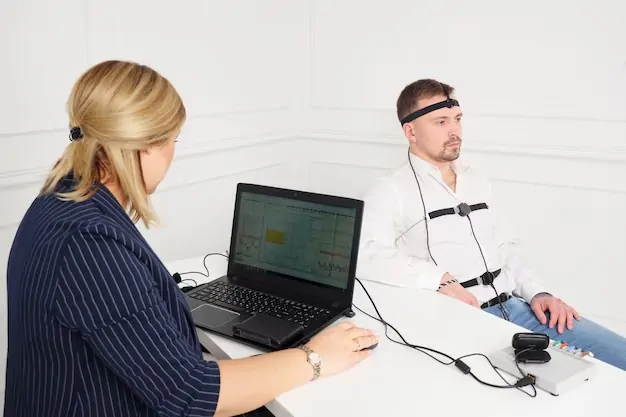
A personnel polygraph test is one of the most debated tools in corporate screening. Some companies see it as an added layer of protection, while others treat it as an excessive measure that creates legal, ethical, and managerial risks. The central question is not whether the method exists, but when its use can be justified in a business setting. In discussions about employee screening and digital behavior, even unrelated search patterns such as chicken road 2 casino may be cited as examples of how organizations try to interpret signals without always having direct proof of misconduct.
For a company, justification must be based on risk, relevance, and proportionality. A polygraph is not a universal hiring instrument and not a substitute for internal controls. It may be defensible in limited circumstances where the role carries unusual exposure to financial loss, data leakage, theft, fraud, or security-related harm. Outside those circumstances, the use of such testing is often hard to support, both practically and ethically.
What a Personnel Polygraph Test Is Meant to Do
A personnel polygraph test is used to assess responses to defined questions by recording physiological indicators during an examination. These may include breathing patterns, pulse activity, and skin response. The examiner then interprets these indicators in the context of the questions asked.
This point is essential for companies to understand. A polygraph does not detect lies in a direct or automatic way. It records bodily reactions that may be associated with stress, conflict, fear, or cognitive strain. Because of that, it should not be treated as a truth machine. In the employment context, its value lies only in its use as a supplementary source of information.
The company’s aim is usually narrower than “finding out who lies.” The real aim is to reduce risk where direct trust failures can cause measurable damage. That is why the question of justification depends less on the technology itself and more on the business context in which it is proposed.
When the Company Has a Stronger Case for Using It
A company is more justified in using a personnel polygraph test when the position involves a high level of trust and access. This usually includes roles tied to cash handling, financial authorization, confidential information, procurement, inventory control, security systems, or commercially sensitive decisions.
In these roles, misconduct can create harm beyond the individual act. One dishonest employee may expose pricing strategy, facilitate theft, manipulate supplier relations, or enable fraud that spreads across departments. In such cases, management may argue that ordinary interviews and document checks do not always reveal hidden risk.
The stronger the potential damage, the stronger the argument for extra screening. But this logic only holds if the connection between the role and the risk is clear. A company cannot justify intrusive testing merely because it wants more control. The method must respond to a specific and meaningful exposure.
Pre-Employment Screening: Limited but Sometimes Defensible
One setting where companies consider justification is pre-employment screening for sensitive positions. The argument here is preventive. Management wants to reduce the chance of hiring a person who may conceal past misconduct, conflicts of interest, or material falsehoods.
This may be defensible when the candidate is applying for a position with direct access to assets, confidential records, or critical business processes. For example, a role involving cash movement, high-level procurement, or internal security creates a different level of exposure than a routine administrative post.
However, even in these cases, the company should not treat the polygraph as a primary selection tool. It cannot assess professional competence, role fit, communication skills, or judgment under normal work conditions. These still require structured interviews, reference checks, verification of credentials, and, where relevant, task-based evaluation.
The polygraph becomes easier to justify only when it is one element of a wider process and when the role-specific risk is concrete rather than speculative.
Internal Investigations After a Specific Incident
The most defensible use of a personnel polygraph test is often during an internal investigation. If a company faces suspected theft, document leakage, fraud, inventory manipulation, or abuse of access, it may need to evaluate contradictory statements when evidence is incomplete.
In this context, the justification is stronger because the issue is specific. The test can be built around a defined event, a narrow timeline, or a particular action. That makes the examination more focused and more aligned with its actual design.
For the company, this can help reduce uncertainty and guide further investigation. It may indicate where to review logs, documents, approvals, or communications. It may also help management avoid treating all employees as equally suspect when the field of inquiry should be narrower.
Still, the company must avoid overreliance. A polygraph result should not replace fact-finding. It should support an investigation, not conclude it by itself.
The Importance of Proportionality
A core principle in deciding whether the test is justified is proportionality. The more invasive the measure, the stronger the business reason must be. A company should ask whether the expected benefit is large enough to support the burden placed on the employee or candidate.
This means the test is harder to justify for general screening across broad staff categories. Applying it to all personnel, regardless of role, creates a weak rationale. Not every employee has access to sensitive assets or information. Not every position creates the same risk if trust fails.
Proportionality also requires thinking about alternatives. If the company can manage the risk through stronger internal controls, segregation of duties, audit trails, access restrictions, or better supervision, then a polygraph may add little value. The method should not be used where better and less intrusive tools can address the same concern.
Business Benefits the Company May Seek
When a company does justify a personnel polygraph test, it usually seeks one or more of four business outcomes.
The first is prevention. The company wants to reduce the chance of bringing a high-risk person into a sensitive role.
The second is clarification. After an incident, management wants a structured way to examine conflicting accounts.
The third is deterrence. The existence of screening may discourage some forms of internal misconduct, especially in roles involving assets or confidential information.
The fourth is risk prioritization. In a situation with limited evidence, the company may use the test to decide where to focus its review and which internal controls need reinforcement.
These benefits can be real, but only if the company uses the method carefully and within clear limits.
Risks of Using It Without Strong Justification
A company that uses polygraph testing without a strong case may create new problems instead of reducing old ones. One risk is false confidence. Management may assume that a favorable result resolves doubts when deeper investigation is still needed.
Another risk is internal distrust. Broad or poorly explained testing may damage morale and signal that management relies more on suspicion than on sound systems. That can weaken workplace culture, especially if employees see the process as unfair or arbitrary.
There is also the risk of poor decision-making. Because polygraph results depend on interpretation, they should never be the only basis for hiring rejection, discipline, or accusations. A company that forgets this may expose itself to internal conflict and flawed personnel decisions.
What Must Be in Place Before the Company Uses It
Before using a personnel polygraph test, the company should be able to answer several questions clearly. What exact risk is being addressed? Why is the role or incident serious enough to justify this measure? Are there less intrusive ways to manage the same issue? Will the result be treated as one source of information rather than final proof? Is the examiner qualified and the process structured?
If these questions cannot be answered, the justification is weak. The method should never be introduced only because it seems strict or because competitors use it. The company must link the test to a defined business need.
Conclusion
A personnel polygraph test is justified for a company only in limited situations where the business risk is substantial, the purpose is specific, and the measure is proportionate to the exposure involved. The strongest cases usually involve sensitive hiring decisions and focused internal investigations tied to financial loss, data exposure, theft, fraud, or security concerns.
Even then, the polygraph should remain a secondary tool. It can help reduce uncertainty, but it cannot replace interviews, evidence review, internal controls, and sound management judgment. For companies, the real standard of justification is not whether the tool is available, but whether its use is necessary, targeted, and part of a disciplined risk-management process.