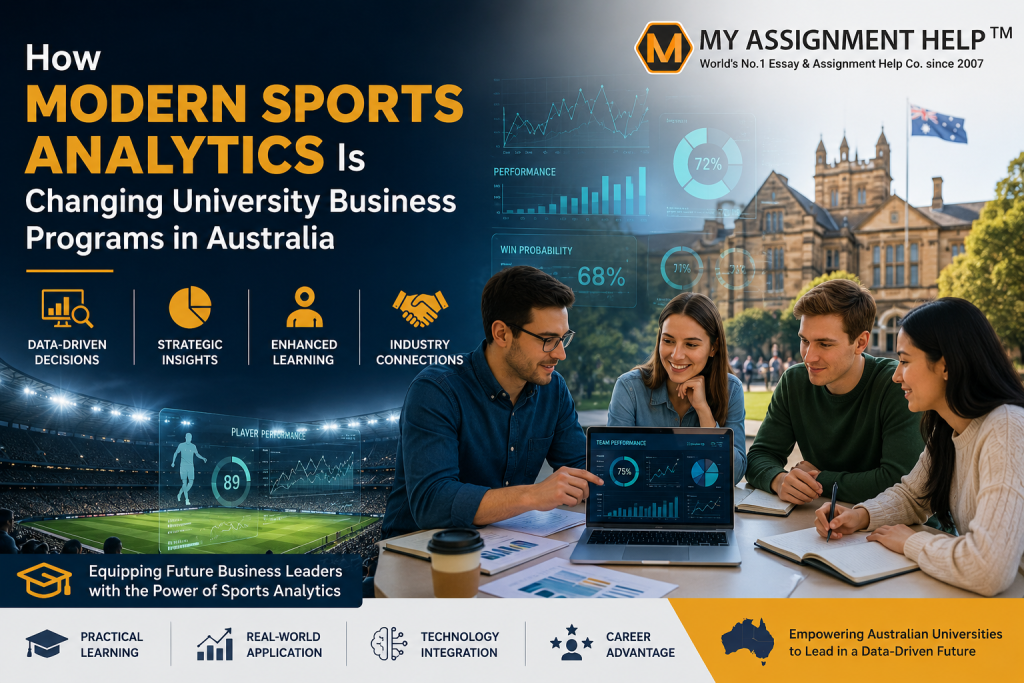
The global sports industry is undergoing a massive digital shift. Gone are the days when sports management was purely about booking venues, organizing ticket sales, and managing player schedules. Today, sports is a multi-billion-dollar business driven by numbers, predictive algorithms, and real-time statistics. From tracking player biometrics to analyzing fan engagement on social media, data has become the most valuable player on and off the field.
This data revolution has moved directly into higher education. Major universities across Sydney, Melbourne, and Brisbane are completely revamping their business curriculums. They are integrating advanced sports analytics into traditional business programs to prepare the next generation of graduates for a highly competitive market. As a result, modern business students are trading traditional case studies for complex data models and regression analysis.
The Intersection of Big Data and Sports Management
For decades, business degrees focused heavily on standard accounting, human resources, and general economics. However, the rapid rise of professional leagues like the AFL, NRL, and BBL has changed what employers look for in a graduate. Modern sports organizations require professionals who can look at thousands of data points and turn them into profitable business strategies. This means students must quickly learn how to use advanced database software alongside their regular business textbooks, creating a much heavier workload than previous generations faced.
Managing this transition from basic business theory to advanced statistical modeling can feel incredibly overwhelming. When a student is buried under multiple technical deadlines, finding an affordable way to keep up is essential. Many smart learners find that securing cheap assignment help from a trusted academic platform helps them stay on track without breaking the bank. Relying on an established educational resource like MyAssignmenthelp gives you access to practical templates and clear data breakdowns. This extra support allows you to understand how complex formulas apply to real-world business scenarios, keeping your grades high all semester.
Why Universities Are Rewriting the Business Curriculum
The decision to change university standards across Australia did not happen by accident. It is a direct response to a changing workforce that demands elite digital skills.
Moving Beyond Simple Spreadsheets
In the past, knowing how to create a basic spreadsheet was enough to get a job in sports administration. Today, university modules require students to work with complex programming languages and live data streams. Students are taught to analyze everything from stadium foot-traffic patterns to global merchandise supply chains. This high technical standard ensures that graduates can immediately add value to any corporate sports organization.
The Rise of Consumer Intelligence
Understanding the modern sports fan is a complex science. Universities now offer specialized courses that focus entirely on tracking consumer behavior through digital apps, streaming platforms, and fantasy sports leagues. Business majors learn how to segment audiences based on deep engagement data, allowing corporate sponsors to target their advertisements with absolute mathematical precision.
Transforming Traditional Business Specializations
The impact of sports analytics is not limited to a single elective course. It is actively reshaping core business disciplines, turning abstract mathematical theories into practical tools for market growth.
The Evolution of Sports Advertising Strategies
Nowhere is this shift more visible than in corporate advertising and brand partnerships. Companies no longer pay millions of dollars for a stadium billboard based on gut feeling alone; they demand exact proof of viewer attention and digital conversion rates.
Because of this shift, students are facing highly technical coursework that blends predictive modeling with creative branding. If you get stuck trying to map out a massive consumer data set or design a digital campaign, finding expert Marketing Assignment Help can save you days of frustration. Working with a professional consultant allows you to see exactly how data visualization tools map out market trends. This specialized guidance helps you write final reports that perfectly balance creative marketing insights with flawless statistical proof.
Financial Modeling and Athlete Valuation
Sports analytics has also changed how corporate finance is taught. Students use advanced risk-assessment tools to evaluate player contracts, simulate trade scenarios, and predict the long-term financial health of stadium infrastructures. This coursework mirrors the high-stakes financial modeling used by major investment firms, giving students a massive advantage in the broader corporate world.
The Benefits of Data Literacy in the Modern Job Market
Embracing this technical shift does more than just help you pass your university courses. It sets you up for long-term career success across multiple corporate industries.
Developing Highly Transferable Skills
The beauty of learning sports analytics is that data is universal. The exact same programming logic used to analyze a basketball team’s defensive metrics can be used to track supply chain efficiencies for a major retail brand or analyze stock market trends. Graduates leave university with a highly versatile toolkit that is attractive to employers outside the sports world, including tech firms, banks, and global consulting agencies.
Mastering Digital Collaboration
Modern university programs force students to work in virtual data labs, collaborating on live cloud networks to solve complex business riddles. This mirrors the structure of modern corporate environments, helping you develop excellent communication, remote teamwork, and project management skills well before graduation.
Navigating the Challenges of a Technical Degree
While the rise of sports analytics offers incredible opportunities, it requires a steady commitment to learning new digital tools. Success in this modern academic landscape comes down to utilizing your resources wisely, practicing consistently, and learning how to bridge the gap between numbers and human behavior. By developing these skills, you can confidently step into the fast-paced business world ready to lead.
About the Author
Jack Thomas is a Senior Academic Consultant at MyAssignmenthelp with over eight years of experience supporting university business majors across Australia. When he isn’t mentoring youth or designing practical, accessible study guides, Jack loves hiking through rugged mountain trails and keeping a close eye on the latest innovations in sports technology. He believes that mastering data literacy is the ultimate key to unlocking unlimited career freedom for modern students.
Frequently Asked Questions
What exactly is sports analytics in a business context?
It is the practice of using data and statistical methods to improve business decisions in sports. This includes dynamic ticket pricing, optimizing sponsorship returns, tracking fan engagement, and managing stadium supply chains.
Do I need to be a math genius to succeed in a modern sports business program?
No, you do not. While the courses use data, the focus is on interpreting what the numbers mean for a business rather than doing complex manual calculations. Specialized software handles the heavy math for you.
How does MyAssignmenthelp ensure my business assignments get top marks?
The platform connects you with qualified academic writers who hold advanced business and data analytics degrees from top universities. They understand current industry trends, strict formatting rules, and marking rubrics inside and out.
Can sports analytics skills help me get a job outside of the sports industry?
Yes, absolutely. The data cleaning, statistical analysis, and predictive modeling skills you learn are in high demand across banking, digital marketing, healthcare, and retail management worldwide.
What is the best way to handle a difficult data assignment on a short deadline?
Break the project into smaller sections. Start by organizing your raw data before attempting to run any tests or write your analysis. If you run out of time, reaching out to an online academic expert can provide a flawless outline to speed up your work.