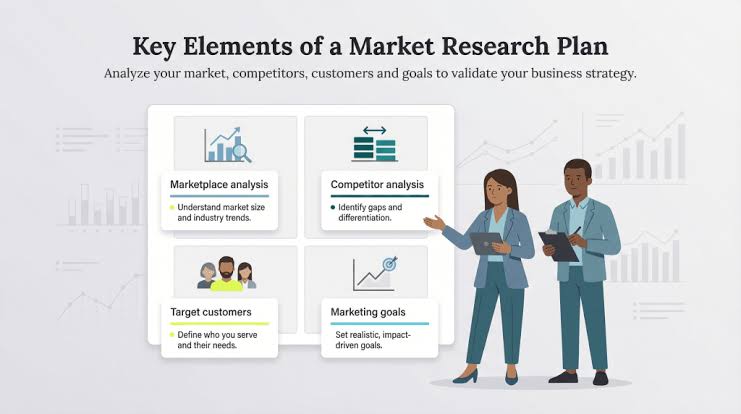
Competition affects nearly every business, regardless of its size or industry. Customers can compare products, prices, reviews, and service experiences more easily than ever, while new competitors may enter a market with different business models or technologies. Organizations that understand their customers and competitive environment can make more informed decisions about positioning, product development, and marketing. Those that rely only on assumptions may overlook changes that affect their ability to attract and retain customers.
A market research platform can help businesses collect structured feedback, compare customer perceptions, and investigate market opportunities. By supporting audience targeting, survey collection, and organized analysis, research technology can make competitive intelligence more systematic. Businesses looking for information about modern consumer research solutions can also explore purespectrum.com.
Understanding Competitive Business Insights
Competitive business insights are findings that help an organization understand how customers perceive competing brands, which alternatives they consider, and where opportunities may exist to create greater value.
These insights are not limited to knowing what competitors charge or which products they sell. Businesses also need to understand why customers choose one option over another, what they appreciate about existing solutions, and which needs remain unmet.
For example, two software companies may offer similar functionality, but customers may prefer one because it is easier to set up or provides more responsive support. A company that focuses only on comparing feature lists may miss the factor that actually influences purchasing decisions.
Research helps organizations examine the customer perspective instead of relying exclusively on internal opinions. It can reveal differences between how a business believes it is positioned and how customers actually understand its offering.
Competitive insights should support better decisions rather than encourage companies to copy every successful competitor. The objective is to understand the market well enough to identify a credible position and deliver value that matters to the intended audience.
Define Your Competitive Research Questions
Competitive research becomes more useful when it begins with specific questions. A broad instruction to study competitors can lead to a large collection of information without clear business implications.
Instead, teams should identify the decisions they need to make. A company may want to understand why customers switch brands, whether its pricing is competitive, which product features matter most, or how its reputation compares with alternatives.
Each question requires an appropriate method. Research into brand perception may involve awareness and preference surveys. Pricing research may examine willingness to pay and the perceived value of different packages. Product research may compare feature priorities and customer satisfaction across competing solutions.
Defining the objective also helps identify the appropriate respondents. Existing customers can explain why they selected the business, while customers of competing brands may offer insight into alternative preferences. Prospective buyers can help reveal the criteria people use before making a decision.
A clear research brief should describe the decision, target audience, required evidence, timeline, and intended use of the findings. This provides a practical basis for choosing the right research tools and measuring whether the project has succeeded.
Identify Your Direct and Indirect Competitors
Direct competitors offer products or services that closely resemble those of your business. Indirect competitors may solve the same customer problem through a different approach.
A meal delivery service, for example, may compete directly with other delivery companies and indirectly with supermarkets, takeaway restaurants, and customers preparing meals at home. Looking only at direct competitors could produce an incomplete view of the alternatives available to consumers.
Research can help businesses understand which alternatives customers actually consider. Survey questions can ask respondents which brands they recognize, which options they have purchased, and what factors influence their choices.
Competitor lists should be based on the customer problem being solved rather than assumptions about industry boundaries. A company may discover that its biggest competitive threat comes from a substitute product or a different way of delivering the same benefit.
The scope should remain manageable. Businesses do not need to investigate every possible alternative in equal depth. They should prioritize the competitors and substitutes most relevant to the decision under consideration.
Measure Brand Awareness and Customer Perception
Brand awareness indicates whether consumers recognize or recall a brand. Customer perception explores what they associate with it, including quality, value, reliability, convenience, and trust.
These measures can help businesses understand their competitive position. A brand may have high awareness but weak purchase preference, suggesting that familiarity alone is not enough to convince customers. Another brand may have lower awareness but strong satisfaction among people who have tried its products.
Surveys can measure unaided awareness by asking which brands come to mind within a category. Aided awareness questions provide a list of brands and ask respondents which they recognize. Additional questions can explore perceived differences, trust, and purchase consideration.
When comparing competitors, businesses should use consistent questions and an appropriate target audience. Differences in the sample can affect the results, especially if one brand is more popular within a particular demographic group.
Repeated measurement can reveal whether a campaign, product launch, or change in customer experience has influenced brand perceptions. These findings help businesses understand not only where they stand today but also how their position changes over time.
Investigate Why Customers Choose Competitors
Knowing that customers prefer a competitor is useful, but understanding the reason is more actionable. Customers may select alternatives because of price, product quality, convenience, availability, customer service, reputation, or features that better match their needs.
Research should explore these factors without assuming that a single explanation applies to everyone. Some customers may be highly price-sensitive, while others prioritize reliability or ease of use.
For example, a subscription company may discover that customers who cancel often move to a competitor with a simpler plan structure. The problem may not be the core service but the difficulty of understanding the available packages. Simplifying the pricing page could be a more appropriate response than lowering every subscription price.
Businesses can ask recent buyers and former customers about their decision process. Questions should be neutral and allow participants to identify reasons that the company did not anticipate.
The findings should be compared with other evidence, such as cancellation records, support requests, and sales patterns. This helps determine whether reported reasons correspond with broader customer behavior.
Evaluate Competitor Pricing and Perceived Value
Price comparisons can be misleading when businesses ignore differences in the value customers receive. Two products with different prices may include different features, service levels, warranties, or support arrangements.
Competitive pricing research should therefore examine more than the advertised amount. Businesses need to understand what customers believe they receive for the price and how they compare the available options.
Surveys can explore perceived affordability, price expectations, willingness to pay, and reactions to different product packages. Concept testing can help researchers evaluate potential offers before they are introduced to the market.
However, stated willingness to pay is not the same as an actual purchase. Customers may express interest in a premium option but choose a cheaper alternative when faced with a real buying decision. Findings should be interpreted alongside sales data, margins, and competitive conditions.
The objective is not always to become the lowest-priced provider. Research may reveal that customers are willing to pay more for better service, greater convenience, or reduced risk. Understanding these priorities can help a business compete through value rather than price alone.
Discover Gaps in the Market
A market gap exists when customers have a need that existing offerings do not adequately address. Identifying such gaps can help businesses develop new products, improve services, or target underserved audience groups.
Research can investigate customer frustrations, desired features, unmet expectations, and reasons for rejecting current solutions. Open-ended questions are particularly useful during exploratory research because they allow people to describe problems in their own words.
Suppose a business software company finds that smaller organizations consider existing products too complicated to configure. This could suggest an opportunity for a simpler solution, provided enough customers experience the problem and are willing to pay for an alternative.
Not every complaint represents a viable opportunity. Businesses should evaluate the number of potential customers affected, the importance of the problem, the availability of alternatives, and the cost of developing a solution.
Concept testing can help assess early ideas before major investment. By presenting possible solutions to relevant audiences, companies can compare reactions, identify confusing elements, and refine the offering based on evidence.
Use Audience Segmentation for More Precise Positioning
Different customer groups may evaluate competitors using different criteria. A small business may prioritize affordability and ease of use, while a large enterprise may focus on security, integration, and support.
Segmentation helps organizations identify these differences and develop more precise positioning strategies. Rather than presenting the same message to everyone, a company can emphasize the benefits most relevant to each audience.
A research platform can help researchers compare responses across customer groups and evaluate differences in brand perception, purchase criteria, and product preferences. This information may reveal that a company is well positioned for one segment but less competitive in another.
Businesses should select segments that are meaningful and large enough to support reliable conclusions. Excessively narrow segmentation can produce small samples and fragmented marketing strategies.
Positioning should also reflect capabilities the company can genuinely deliver. Research may reveal a customer preference, but the business must determine whether it can meet that expectation consistently and profitably.
Turn Competitive Findings Into Action
Competitive research should lead to practical decisions rather than simply producing reports. Findings may suggest a need to improve customer service, revise product messaging, adjust packaging, develop a new feature, or focus on a different audience.
Teams should prioritize recommendations based on the strength of the evidence, potential customer impact, implementation cost, and alignment with business strategy.
For example, research may show that a competitor is perceived as easier to use. The appropriate response could involve simplifying onboarding, improving product instructions, or testing a clearer website message. Copying the competitor’s entire product is unlikely to be necessary if the underlying customer problem can be addressed more directly.
Where possible, businesses should test changes on a manageable scale before implementing them widely. A small campaign experiment or prototype study can provide evidence about whether the proposed improvement resonates with customers.
After implementation, teams should measure relevant outcomes such as conversion, customer satisfaction, retention, or brand preference. This helps determine whether the action achieved its intended result.
Maintain Ethical and Reliable Competitive Research
Competitive research should rely on lawful, responsible information-gathering methods. Businesses should avoid misrepresenting themselves to obtain confidential information, accessing restricted systems, or collecting personal information inappropriately.
Customer surveys should explain their purpose where required, collect only necessary information, and protect participant privacy. Researchers should follow applicable data protection requirements and internal policies.
Research quality also matters when comparing competitors. Leading questions, unbalanced samples, and inconsistent measurement can produce conclusions that unfairly favor one brand. Teams should document their methods and disclose important limitations.
Competitive intelligence is most useful when it provides a credible picture of the market, including findings that challenge existing assumptions. Reliable evidence helps organizations make better decisions and avoid investments based on misleading comparisons.
Conclusion
Competitive business insights help companies understand customer preferences, compare brand perceptions, investigate pricing, discover unmet needs, and improve their market positioning. Research technology can make these activities more organized by helping teams reach relevant respondents and analyze feedback systematically.
The most effective approach begins with clear research questions and an appropriate audience. Businesses should evaluate evidence carefully, prioritize opportunities that match their capabilities, and test proposed improvements before making major commitments. By combining customer research with ongoing measurement, organizations can respond more effectively to competitive pressures and build strategies around genuine customer needs.