
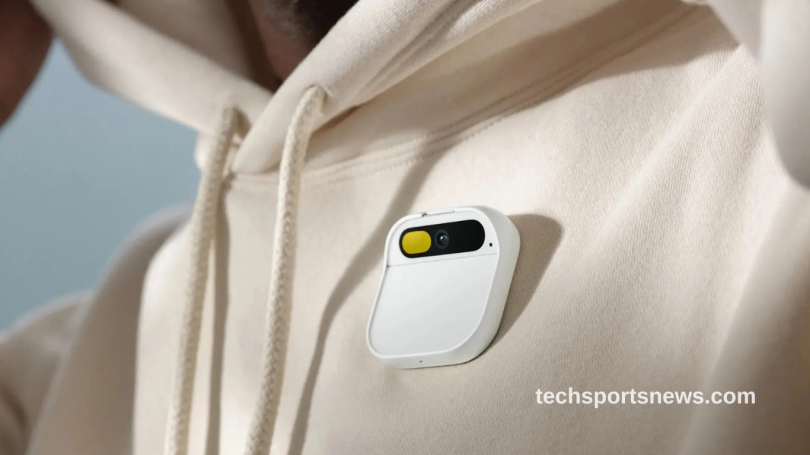
The once-hyped Humane AI Pin, pitched as a futuristic wearable assistant designed to replace smartphones, has officially met its demise. Humane, the San Francisco-based startup founded by former Apple executives, has sold its core assets to HP Inc. for $116 million, marking a swift and unexpected end to a product that promised to reshape how humans interact with technology.
Backed by nearly $230 million from top-tier investors and venture capitalists, Humane launched its AI Pin in late 2023. However, within months, the device failed to meet performance expectations, facing harsh criticism over usability, battery life, pricing, and practical functionality. Despite its vision of ambient computing, the Pin struggled to deliver consistent value to consumers.
Now, with HP stepping in to acquire Humane’s assets, the tech industry is abuzz with speculation about what’s next. HP’s acquisition signals both a cautionary tale and a potential new direction in the race to commercialize AI-powered wearables.
HP Secures Humane’s IP and Talent for Strategic AI Expansion
HP Inc., a global leader in personal computing and printing solutions, has officially acquired the intellectual property, patents, and select employees from Humane for $116 million. This acquisition is not merely about salvaging failed technology—it’s a strategic move by HP to deepen its investment in artificial intelligence and wearable computing.
HP has been vocal about evolving its hardware offerings to include smarter, AI-integrated experiences. By taking over Humane’s assets, the company gains not only proprietary tech but also access to top-tier talent previously involved in the AI Pin’s development. This move positions HP to compete more aggressively in an emerging market that blends AI, mobility, and personalization.
Humane AI Pin’s Short-Lived Life and Harsh Market Reality
Launched with high expectations, the Humane AI Pin was envisioned as a screenless, voice-driven device that projected information onto the user’s hand and responded to verbal cues. Marketed as a revolutionary post-smartphone gadget, it struggled from the outset due to poor battery performance, software glitches, and a lackluster user interface.
Read More : Apple will hold WWDC from June 9 to June 13
Despite an ambitious debut at TED and partnerships with OpenAI and Qualcomm, the device received poor reviews from tech critics and end-users. Many cited its limited functionality, unreliable voice commands, and the steep price of $699 (with a $24/month subscription fee) as major barriers to adoption. The contrast between its conceptual vision and market execution became too wide to ignore.
Investors Lose Confidence as Sales Plummet
Humane secured funding from top names such as Sam Altman, Marc Benioff, and Tiger Global, raising over $230 million pre-launch. However, those investments did not translate into commercial success. After initial curiosity waned, sales of the AI Pin plummeted, forcing the company to reduce its workforce and shift strategy.
Reports emerged of internal struggles, including poor leadership decisions, overly ambitious timelines, and insufficient product testing. Investors began losing confidence rapidly, and by Q2 of 2024, the startup was actively seeking buyers for its assets. HP’s acquisition represents a partial recovery for stakeholders, but many backers will see limited returns on their investment.
HP Eyes Integration with Its Future Product Line
HP’s interest in Humane’s technology goes beyond a single device. Sources suggest the company plans to integrate aspects of the AI Pin’s software and hardware design into future laptops, tablets, and possibly smart accessories. This approach reflects a broader trend of merging AI capabilities with traditional computing platforms.
The idea is not to revive the AI Pin as a standalone product but to harvest its innovations—such as spatial projection, ambient voice controls, and cloud AI integration for broader applications. HP’s strong manufacturing and global distribution channels provide a solid foundation to scale these features effectively and economically.
AI-Powered Wearables Still Have a Future
While the failure of the AI Pin may suggest doom for wearable AI gadgets, the broader sector remains vibrant. Apple, Meta, and Samsung are actively developing AR glasses and other smart wearables that incorporate AI-driven interactions. Humane’s downfall illustrates the pitfalls of overpromising and underdelivering but does not negate the growing demand for AI-assisted, hands-free computing.
Consumer interest continues to rise in ambient computing systems that offer context-aware responses, integrate with cloud services, and operate seamlessly across devices. The challenge remains to balance technical ambition with real-world functionality—a lesson HP may apply to future projects.
What Went Wrong With Humane’s Execution?
Analysts point to several key reasons for Humane’s failure, beginning with poor hardware performance. The device overheated, drained battery rapidly, and often failed at simple tasks like placing a call or identifying an object. Coupled with laggy software updates, the user experience was inconsistent and frustrating.
Secondly, the company overestimated market readiness for such a product. Consumers are still highly dependent on smartphones and skeptical about replacing them with unproven alternatives. Finally, Humane’s pricing strategy alienated potential users, especially when the subscription model was perceived as unjustified for the value delivered.
Public Reaction and Industry Analysis
News of the acquisition sparked mixed reactions across the tech industry. Some view it as a classic Silicon Valley misfire—where bold visions clash with execution realities. Others argue it’s a smart pivot, allowing core innovations to survive under a more stable and experienced corporation like HP.
Tech analysts are closely watching how HP leverages Humane’s assets. If successfully implemented, it could turn a failed experiment into a landmark innovation in AI-driven computing. Meanwhile, the general public remains cautious but intrigued by the idea of AI-powered gadgets that simplify digital interactions.
Implications for AI Startups and Venture Capital Trends
Humane’s trajectory will likely influence how venture capitalists approach AI hardware startups going forward. The rush to fund early-stage companies with massive valuations based on visionary demos is facing renewed scrutiny. Investors are demanding clearer go-to-market strategies and practical use-case demonstrations.
This event may also prompt startups to prioritize iterative product development and user testing over splashy unveilings. The idea that “if you build it, they will come” has been challenged anew. Humane’s collapse, while unfortunate, serves as a benchmark for the maturation of the AI startup ecosystem.
What’s Next for Humane’s Founders and Team?
Bethany Bongiorno and Imran Chaudhri, the co-founders of Humane and former Apple designers, are expected to stay with HP temporarily as part of the asset transition. Their future roles remain unclear, but their creative vision and industry connections suggest they may return with new ventures in the coming years.
Meanwhile, HP has not disclosed which other members of the Humane team it will retain. It’s likely that engineering and AI specialists will be absorbed into HP’s R&D units. This transfer of talent could rejuvenate HP’s internal innovation labs, especially as it ramps up efforts in AI and wearable technology integration.
Humane’s Legacy: Ambition Without Execution
Despite its commercial failure, Humane’s AI Pin will be remembered as a bold attempt to reimagine personal computing. It aimed to free users from screens and offer a more natural interface for digital tasks. While it didn’t live up to its promise, the attempt itself has pushed conversations around ambient computing forward.
The AI Pin’s legacy may eventually be felt not through direct use but through the technology it inspired. HP’s acquisition ensures that at least some elements of Humane’s vision may yet see the light of day—refined, rebranded, and reintroduced in ways that resonate better with consumers.
Frequently Asked Questions
Why did Humane’s AI Pin fail?
It failed due to poor hardware performance, high pricing, inconsistent user experience, and lack of strong consumer demand.
What exactly did HP buy from Humane?
HP acquired Humane’s patents, intellectual property, and some of its employees for $116 million, aiming to integrate the technology into future products.
Will HP relaunch the AI Pin?
No, HP has no plans to relaunch the AI Pin as a standalone product. Instead, it will repurpose the technology for broader integration.
What was the AI Pin designed to do?
It was intended as a wearable AI assistant that could replace smartphones, using voice commands and a laser projector to interact with users.
Who were Humane’s key investors?
Notable investors included Sam Altman, Marc Benioff, Tiger Global, and SoftBank Vision Fund, contributing over $230 million in total.
What is ambient computing?
Ambient computing refers to technology that operates in the background and interacts with users contextually, often without screens or manual input.
How will HP benefit from this acquisition?
HP gains valuable AI technology, innovation potential, and top-tier talent to enhance its future hardware and software offerings.
Are AI wearables still viable?
Yes, major companies like Apple and Meta continue to develop AI-driven wearables, indicating strong market potential with the right execution.
Conclusion
Humane’s AI Pin project ultimately failed to meet its lofty ambitions, but its acquisition by HP revives elements of its innovation for future possibilities. The tech world now watches as HP attempts to turn one startup’s loss into a new era of AI-powered computing.


